
Foundation Repair in Plano, TX
Foundation repair in Plano, TX and Collin County. Pier installation, crack repair, drainage correction, and interior finish repair — all under one contract. Free estimates.
Foundation cracks don't wait. The longer you delay, the more your repair bill grows — and the more problems cascade through the rest of the house. Call for a free assessment now.
Foundation problems in North Texas are not the exception — they're the norm for homes more than 10–15 years old. The expansive clay soil that covers most of Collin County shrinks and swells with every wet-dry cycle, creating movement that builds up in foundations year after year. HAWC General Contracting handles foundation assessment, pier installation, crack repair, drainage correction, and the drywall, flooring, and trim work that foundation movement causes — all under one contract. No hand-off between a structural contractor and a finish contractor. We identify the source of the problem and fix everything it touched.
Signs You May Have a Foundation Problem
Foundation movement almost always shows up in the interior finishes before a homeowner sees a crack in the slab itself. Know what to look for:
- Doors and windows that stick or won't close: Foundation settlement changes the square of door and window frames. Sticking is often the first symptom homeowners notice.
- Diagonal cracks at window and door corners: These cracks follow the line of stress from frame movement — stair-step cracks in drywall, not vertical or horizontal ones, are particularly telling.
- Cracks in brick mortar joints: Stair-step cracks in brick veneer are a classic sign of differential settlement in a Texas home.
- Sloping, bouncy, or uneven floors: A marble or ball bearing that rolls consistently toward one corner is not normal. Floor slope greater than 1" per 10 feet warrants a foundation evaluation.
- Gaps between walls and ceilings: Separation along the top of walls or at corners indicates the wall is moving independently of the roof structure.
- Cracks returning in the same location after repair: Cosmetic repair of cracks that keep coming back means the movement hasn't been stabilized.
What We Do to Fix It
Pier installation: Push piers (driven hydraulically to bedrock or load-bearing strata below the unstable soil layer) are the standard structural solution for settled foundation sections in Plano and the surrounding area. Helical piers are used in applications where the soil bearing capacity is inconsistent and a torque-based installation is more reliable. We use piers to stabilize the foundation at its current position and, when conditions allow, to lift settled sections back toward level.
Crack injection: Existing cracks in poured concrete foundations and basement walls are stabilized with epoxy injection (structural, for load-bearing crack repair) or polyurethane injection (flexible, for water-sealing non-structural cracks). We use the right product for the crack type — an epoxy-filled crack that continues to move will re-crack. A crack that needs waterproofing, not structural repair, doesn't need epoxy.
Drainage correction: The majority of foundation problems in Collin County are driven or worsened by inadequate drainage. When water ponds near the foundation after rain, or gutters discharge directly against the foundation wall, the soil moisture cycle becomes extreme — saturated after storms, dried out in summer — and the movement accelerates. We address grading, downspout extensions, French drain installation, and gutter corrections as part of the foundation repair scope when drainage is a contributing factor.
Interior finish repair: Foundation movement doesn't just affect the foundation — it cracks drywall, warps trim, and can warp or buckle hardwood floors. We repair the interior damage after the foundation work is stabilized, so you're not managing two separate contracts and two separate schedules.
The Texas Clay Soil Problem
Most homeowners outside of Texas are surprised to learn that foundation problems in North Texas are overwhelmingly caused by soil, not by construction defects. Collin County sits on some of the most expansive clay soil in the country. When this soil absorbs water, it expands. When it dries, it contracts. The volume change in a full wet-dry cycle can exceed 10%, which translates to more than an inch of soil movement directly beneath a foundation over the course of a year.
New homes are not immune to this. A house built correctly in 2010 on properly prepared grade will begin showing movement symptoms within 10–15 years if drainage isn't actively managed. This is why so many Plano and Allen homeowners in well-maintained subdivisions find themselves dealing with foundation issues right on schedule.
The structural repair — piers, crack injection — addresses the symptoms. Drainage management addresses the cause. Both are part of a complete foundation repair scope in this region.
Getting an Honest Assessment
Foundation repair in Texas has a complicated reputation, and not without reason. Some contractors use scare tactics to sell pier installations that aren't necessary. Others underscope and come back with change orders. We approach foundation assessments differently: we document what we find, explain what it means, tell you what needs to be done now versus what can be monitored, and provide a detailed written estimate before any work starts.
Not every crack warrants an immediate structural repair. Hairline cracks in slab corners are common and often cosmetic. We'll tell you that. What warrants action is active settlement — measurable floor slope, actively growing cracks, sticking doors that weren't sticking six months ago. That assessment requires an on-site visit, not a phone call.
Insurance, Documentation, and Claims
Foundation damage caused by a covered event (sudden pipe leak that saturated soil, for example) may be covered under your homeowner's policy. Gradual settlement from soil movement typically is not. We provide detailed documentation — photos, measurements, written assessment — that insurance adjusters can use to evaluate a claim. If the damage is covered, that documentation accelerates the claim process significantly. If it's not covered, you at least have a clear picture of the scope and cost before making a repair decision.
Frequently Asked Questions
How do I know if my foundation needs piers or if it's just cosmetic cracking?
The key factors are floor slope (more than 1" per 10 feet warrants investigation), crack width and pattern (diagonal cracks growing over time vs. stable hairline cracks), and sticking doors/windows. We assess these indicators during an on-site evaluation and give you an honest answer about what needs immediate attention versus monitoring.
How long does foundation repair take?
Pier installation for a typical residential project takes 1–3 days. Crack injection work is usually 1 day. Drainage correction varies by scope. Interior finish repair (drywall, trim, flooring) depends on how extensive the damage is — typically 2–5 days after foundation work is stabilized.
Will foundation repair fix my sticking doors and cracked drywall?
The piers stabilize the foundation and, if conditions allow, can partially lift settled areas. This often helps doors and windows function better. Drywall cracks and trim damage require separate interior repair — which we handle as part of our full-scope approach.
How much does foundation repair cost?
A targeted pier installation (3–5 piers for a localized settlement area) typically runs $3,000–$8,000. Larger perimeter stabilization projects run $10,000–$25,000+. Drainage corrections and interior finish repair are additional. The only accurate number comes from an on-site assessment.
Why Homeowners Choose HAWC
Every contractor says they're the best. Here's the specific difference.
Ready to experience the HAWC difference?
Other Services in Plano
Full-service general contracting — one contractor for every project.

Bathroom Remodeling
Professional bathroom remodeling services in Plano, TX.
Learn more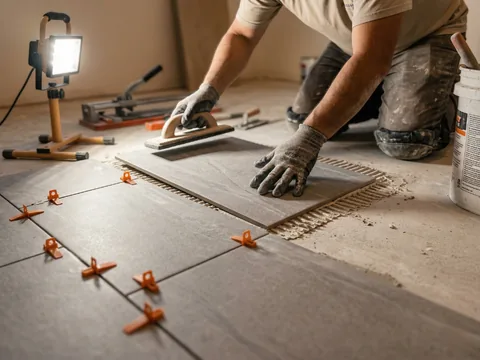
Tile Installation
Professional tile installation services in Plano, TX.
Learn more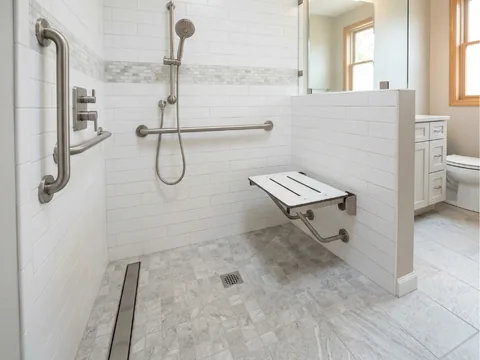
Accessibility Modifications
Professional accessibility modifications services in Plano, TX.
Learn more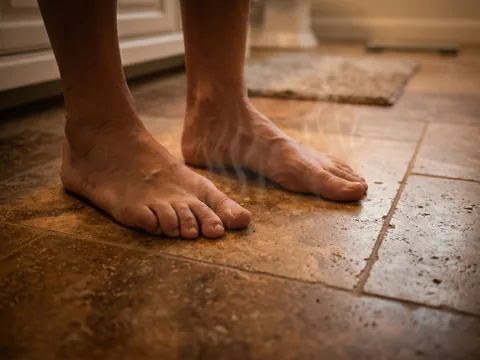
Heated Bathroom Floors
Professional heated bathroom floors services in Plano, TX.
Learn more
Painting Services
Professional painting services in Plano, TX.
Learn more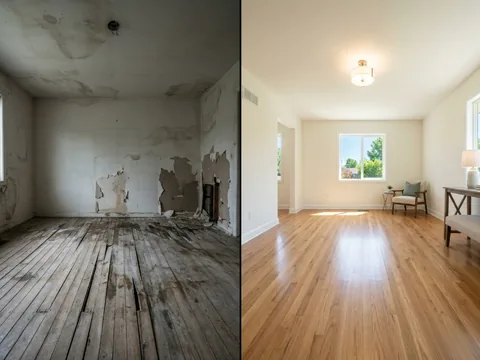
Insurance Repairs
Professional insurance repairs services in Plano, TX.
Learn moreHow It Works — Start to Finish
No surprises. No handoffs. One accountable team from day one.
Free Design Review
In-home visit, real assessment, written pricing. No vague ballparks that double once demo starts.
Material Selection
Tile, fixtures, vanity, finishes — every choice locked in before demo. You know exactly what you're getting.
Professional Build
Our crew handles every phase — demo, waterproofing, tile, plumbing, finish work. One team, start to finish.
Final Walkthrough
You review the completed work with us. If anything isn't right, we fix it before we leave.
Free Design Review
In-home visit, real assessment, written pricing. No vague ballparks that double once demo starts.
Material Selection
Tile, fixtures, vanity, finishes — every choice locked in before demo. You know exactly what you're getting.
Professional Build
Our crew handles every phase — demo, waterproofing, tile, plumbing, finish work. One team, start to finish.
Final Walkthrough
You review the completed work with us. If anything isn't right, we fix it before we leave.
Ready to Get Started?
HAWC General Contracting serves Plano and surrounding North Texas communities. Call (469) 975-5203 — same-day response, honest pricing, no obligation.